how?
how do you fall in love with the same Sun, the same trees, the same colors, the same Moon, the same people
every single day?
you just do.
they
impel,
compel
you.

how?
how do you fall in love with the same Sun, the same trees, the same colors, the same Moon, the same people
every single day?
you just do.
they
impel,
compel
you.

i’m on the phone with her
i listen,
attentive to both the mundanity and gravity
of her daily tales and decadal recollections
i wait for the right words, the right pause to speak, which sometimes never comes/
she is always dilated, crowning or birthing new and old pain
but is fertile with ideas and pregnant with laughter too
i am a patient doula, never a midwife.
and suddenly, an hour, or more, is gone
dicing and mincing my holy quarternity, my mirepoix, my sofrito — to music or a lecture / sauté, season, blanche, stew, cook, boil, sear, bake, toss, assemble, plate, serve, eat, scrape, scrub, wash, dry, shelve, pack, store, clean and compost.
and suddenly, two — or more hours, are gone
i rush to the stoop hoping i haven’t missed the sweet spot between sunset and twilight/
i watch for the brown bats, i know they come from the west — from the bluff
their roost in remnant shagbark hickory,
and in hollows, i think about how there is no old growth left — hickory, beech, maple, oak, pine — once in primeval abundance,
hell, there are hardly even any old barns or attics left anymore — everyone wants a kennebunkport or grand beach compound, a summer, second or third home/
i am always buoyed at the bats’ arrival, entranced by their acrobatics, they are a living barometer: they’re still alive, still here – in spite of it, all.
and suddenly, an hour is gone
a spider weaves
a web between black walnut leaves
in the very last of light
my obsessive, awed witness of their movements
their silken threads, their physics, their engineering, their architecture
and suddenly, the hour, and light is gone
back on the stoop
i think about
who and what i Am
what i have
what i’ve lost
who i love
what’s past
what’s to come
what i’ll die for, who i’ll die for
what i live for, who i live for
i follow the thread of the patchwork of my quilted life
backward and forward til i reach the beautiful dark fabric of the universe the alpha and omega
i take the ends, and fold it, and fold it again
i put it in my basket to carry inside and upstairs to my bedroom to envelope me
the hours are nearly gone
The Gnostic is neither an ascetic nor a theologian and need not even be particularly religious in the conventional way. The Gnostic is an artist. The Gnostic's brushes, colors, and canvasses are her own body, his own psyche. The Gnostic's technique is one of living and observing life and recognizing it for what it is, without illusions of security, glamor, or despair.
The Gnostic continually explores, always seeking the core of the nature of things. But gnosis, like art, cannot be taught. The flame of living gnosis awakens and rises of its own accord. All we can provide is a nest within our heart, a sanctuary of repose where the breath of the Infinite may whisper its secrets.
—Rosamonde Ishvàku Miller, The Experience of Gnosis. Full article published in The Allure of Gnosticism, Pg. 203, ed. Segal et al, Illinois, USA, Open Court Publishing Company, 1995.
gnome (n.2) "short, pithy statement of general truth," 1570s, from Greek gnōmē "judgment, opinion; maxim, fthe opinion of wise men," from PIE root *gno- "to know."

full bloom,
milkweed, goldenrod, chicory,
aster,
thistle or teasel — i don’t know
they’re 7, 8, 9, feet tall
their leaf cups full of collected dew, or rain
the meadow is just all
give give give.
in fifteen minutes,
give or take,
all, gone
beneath a tractor blade
take, take, take,
take.
Continue reading “The Murder of an August Meadow”i still surprise them
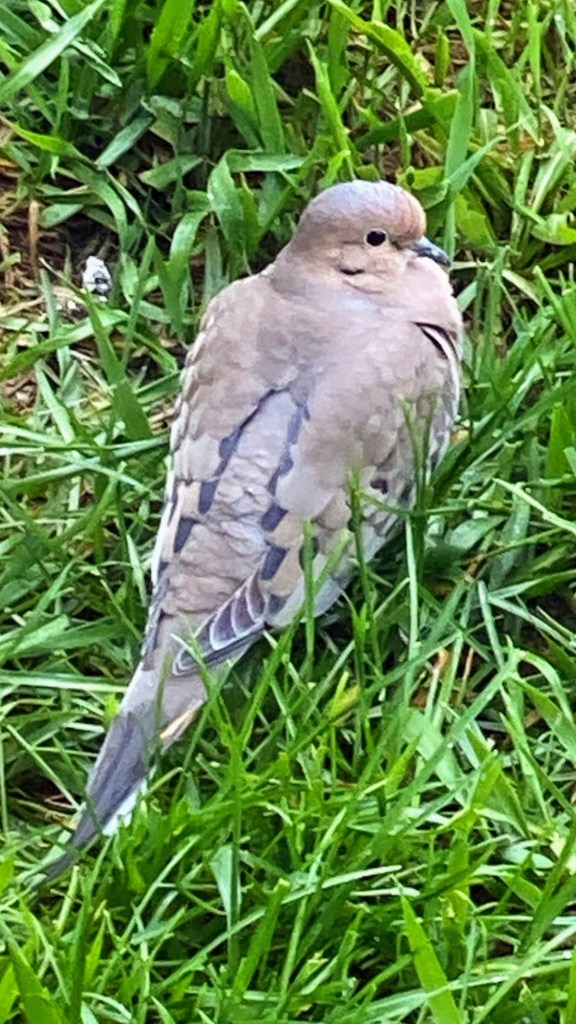
even after nearly six years of quiet-yet-unstealthy,
devotion to them
they’ve never once held their roost or kept their forage
upon my careful intrusion, my neutral presence
to maybe know of me
to maybe trust of me
their survival instinct is so strong
but i still take umbrage,
playful, but umbrage, nonetheless
then i remember Nemerov’s words about their feathers
in our caps, our pillows, our coats
“The Distances They Keep,”
then i remember Kimmerer’s words about
the aweing ubiquity and incredible extinction of the Omimi,
Martha the Last, died 109 years ago come September,
then i read how happy fields of sunflowers are cultivated to serve as bait traps for dove hunters at my beloved Starved Rock – after all the lovely fall engagement and high school photo shoots wind down,
and of those who cruelly suggest their flesh is quite delicious
there is no honorable harvest among the descendants of thieves, of colonizers, of settlers, of “homesteaders” — i know this.
so, my god, yes,
stay shy, stay distant, dear doves,
there are many reasons, that i stay shy, stay distant, and in mourning too, but none as good as theirs

addendum poem:
“dove,”
what a lovely name for a gentle bird
what a lovely name for a newly-born girl
what a terrible name for a woman in this world
i Am revisiting the significance of this poem — first published on my former Tumblr site [kimtn.tumblr.com] in August 2012 and one of the first poems i ever composed
this poem is derived from my near-drowning and out-of-body experience [OBE] when i was about three years old at a beach near Waukegan, Illinois while under the brief watch of my Finnish-American paternal grandmother, Dolores “Babe” Laine (shortened from Kumpulainen) who was often drunk
i am actually lucky that this near-drowning happened to me — and at such a tender age; my out-of-body experience imprinted on me and left me with the capacity to be open to, recognize and receive other metaphysical and liminal experiences throughout my life, and is absolutely part of the origin story for The Limineen and its previous incarnation as the “Accidental Seeker & Intentional Opiner”
beach obe
I open my eyes and ochre water’s all around
I’m underneath, but I’m not scared,
I still see golden sunlight too
I see your legs; you’ve let me go
and I think I’m down here all alone
I hear voices, but I can’t breathe
So I leave, I’m off to explore
But wait, there’s me! – that’s my face!
Can you see, that somehow now, there’s two of me?!
you finally see — the first me
you slowly raise her up
She coughs and breathes;
and the other me, She goes, She floats away
But, which one Am i?
now, i’m not sure
Am i real, or was it She?

pinpoint the moment,
the fulcrum,
where verdant green life
slips into hot summer crackle,
Sun-steeped leaves
aromatic, chamomile-like
parched beneath our feet
all those places a hose will never reach,
a scent in your nose
reminiscent of a birthday hike
on switchbacks
to stand properly on, and in shadow of,
“The Grand”,
a surprise, teal, alpine lake.
was that the time he dove from the rock like a young god, an Adonis?
all those trips to Wyoming in August, in June,
begin to merge into one core memory,
a hunk of young granite
carried down in rock slide
then, carried all the way down to the valley in my pocket
for him, to give to him, on his birthday.
i ran down that mountain like a gazelle, ahead of them
it was the fastest and freest i have ever felt in all my life, truly
and, i astounded them, all, — and myself.
then, a long, quiet drive back to
a newly dog-less house
how did this all happen in one June, one August, or — was it two?
then,
the first time i felt a chill in months,
a different kind of crunch underfoot
the wind rained down
a carpet of leaves all about, in an instant
just as they appeared at birth,
all golden again,
but different, wiser,
a frost sets in.
Continue reading “fulcrums”today, i proposed to a hummingbird we had loved each other in the spirit world
reunited on Earth, now, finally,
beauty, will you please marry me?
i’ll promise to always feed your dreams
you’ll promise to always come find me
i’ll be our garden,
you’ll be our wings
Rebecca Solnit of The Guardian in late July penned a piece which misrepresents climate acceptance, realism and planetary hospice solely as a harmful defeatism and doomerism.
Renaee Churches wrote an important and thoughtful response that will not reach an audience as large as Solnit’s, and is excerpted below:
We have already lost the climate battle and it is stories or opinions like the one above, that are preventing others from grasping this, and stopping us from taking the kinds of collective adaptive responses appropriate on a local and global scale.
The not-too-late framing is a dangerous one. It means people are prepared to wait for global elites to roll out the energy transition, to deploy such ‘solutions’ as carbon capture technologies, or other flawed techno fixes, aimed at making those elites wealthy, while not stopping the baked in warming that is already here and accelerating. It is only when we finally break through the not-too-late taboo that we will begin the work in earnest of adaptation to reduce suffering as much as we can.
We need to normalise talk about collapse and have a broad, society-wide, honest discussion about how we can respond. These discussions are already happening behind closed doors by the Militaries of the world, by Insurance Agencies, and the Financial Sector elites. So we don’t need more writers like Solnit advising the masses to effectively keep calm and carry on. Rather we need a clear-eyed look at the reality of our situation — as a failing global industrial civilisation.
Then together, as ordinary people, we can adjust, grieve and determine how best to navigate the great unravelling as it continues to play out in our lives.
Renaee Churches, Medium
this is my response to Solnit’s piece, which will reach even fewer people:
Climate acceptance and Planetary Hospice involve the refusal to endorse,
and the honesty to resist, further extraction from and destruction of the Earth and injuries to indigenous and marginalized communities of People across the World and to the remaining, marginally or tenuously stable or life-supportive swaths or pockets of wildlife, forests, tundra, deserts, wetlands, lakes, rivers
and ocean.
while washing dinner dishes
a hummingbird surprised me
feeding on a milk thistle
them overgrown “weeds” just outside my window
you see, it’s not just about my garden that i tend to
but the things i leave alone,
that i let go,
i let grow wild, too
i didn’t get a photo, my hands were too wet with soap
yet i really wanted you to know about this, really, to know this, about us, both
you see, we, errant human weeds, you need us too
we’ll prick your finger
we’ll quench your thirst
we’ll tell you truths

I have been in existential hospice for a while now — not because I am personally terminally ill, but because I am experiencing and witnessing our planet die – the planet that we and all our fellow Earthlings from the salmon to the sycamores, from the gulls to the goldenrods, from the frogs to the funguses require for habitat — biologically, habitat is synonymous with life, with sustainable, continuing existence.
The Western World and the white-European capitalist and middle classes — that have driven industrialization; fossil fuel extraction; natural, animal and human resources exploitation, commodification and exhaustion; consumer greed and waste; and atmospheric, environmental and ecological devastation and destruction — will not ride this one out like some cyclical economic corrective shockwave or isolated ‘natural’ disaster — this is not like a stock market crash, an engineered mortgage crisis or a flash flood or rogue tornado that temporarily inconveniences the well-insured:
no, they, their children and grandchildren will suffer and die as well.
The greatest shortcoming of the human race is our inability to understand the exponential function.
Dr. Albert Bartlett, 1923-2013
Ph.D. Nuclear Physics, Harvard University/Professor Emeritus University of Colorado
I can understand how ignorance, whether willful or innocent, is preferable. But now is the time for the truthful acknowledgement and acceptance of the catalyzation of unstoppable and irreversible feedback loops coupled with an accelerating rate of change projected to their reasonable scientific conclusion.
It’s also time for individual personal ecological recognition and reconciliation.We are pure consumers, we are not producers. We are human animals reliant on habitat and other species for our lives — there is no other Earthling species naturally reliant on human beings. It is essential that each one of us understands the gravity of this — and undertakes palliative, hospice and grief work for ourselves, for other beings, for other Earthlings, right now.
Being present as witness and participant, perpetrator and victim, and caregiver and care-receiver during the death of the World as we have always known it, is an undeniably crushing experience and responsibility — but simultaneously, it is also an incredible, incredulous, and humbling honor.
What a time to be alive, truly.
I don’t think anyone of us will garner a reservation on some exclusive, off-planet ‘Elysium’ – and I, myself wouldn’t want one.
Immense grief is the close companion to the immense joy and wonder that I still feel and experience.
there’s no sense
in gaslighting me
i’m already ablaze
nightfall
proceeds like this
small rodentia head under, in or up,
mourning doves perform a vigorous last forage,
hummingbirds, always reliable for last call, drink up/
rabbits boldly show out in numbers to spaghetti-slurp dandelion, plantain and clover stems/
barn and tree swallows own the lower troposphere
red-winged blackbirds
cardinals, and robins
in that exact order
loudly call everyone home for the night
the air surrenders to insects,
the sky — to bats, beautifully acrobatic /hey!/
cottonwoods or black walnuts will host owls on supremely, rare summer evenings
moths, beetles take the lamps
frogs take the sidewalks, steps, stoop,
walls, windows,
and eventually, the lamps too/
toads pace and post sentry on barn thresholds
deer passage through — or bed down
in the tall unmowed grasses, now properly – a prairie, a meadow,
natural salt licks — and halved, quartered and whole apples,
are my selfishly generous lures ’til autumn’s own bounty
coyotes herald the Moon
or the first dark train,
depending on the phase,
lightning bugs mimic eye-level stars,
golden-gold like our Sun and in asynchronous constellations
raccoons strategize, then raid, but i know to expect them now
possums about their business — quiet, slow, sweet — these, my dear ones, stay a while, please
cricketsong
errant cicadas, what year is it, again?
and incessant croaking, banjoing, ribbitting
fog may appear,
then settle — or lift,
or maybe the night is sultry, still or clear
Continue reading “night falls, late july”