“The crew compartment’s breaking up”

John Roderick wrote the above line and repeats it seven times(!) in his song, “The Commander Thinks Aloud”— about the Space Shuttle Columbia Disaster that happened February 1, 2003

and, if I’m not careful, I will start to cry during the first verse


The Commander Thinks Aloud

Boys and girls in cars
Dogs and birds on lawns
From here I can touch the sun


Put your jackets on
I feel we're being born
The Tropic of Capricorn is below


We stall above the pole
Still your face is young
As we feel our weight return


A trail of shooting stars
The horses call the storm
Because the air contains the Charge


The radio is on
And Houston knows the score
Can you feel it, we're almost home

The crew compartment's breaking up
(This is all I wanted to bring home)

The crew compartment's breaking up
(This is all I wanted to bring home)

The crew compartment's breaking up
(This is all I wanted to bring home)

The crew compartment's breaking up
This is all I wanted to bring home to you

Songwriter: John Roderick, The Long Winters


The Commander Thinks Aloud lyrics © Kobalt Music Publishing Ltd., Rough Trade Publishing

this song — since the very first time i (belatedly) heard and learned about it on the Song Exploder podcast in 2016 — became an instant melancholic metaphor-lamentation for me, even while retaining it’s very visceral and intended meaning —

at first, for the climate chaos we face on our communal spaceship — Spaceship Earth,

as in, “hey, do you realize we’re floating in space?” — then, why are we [deliberately] destroying the crew compartment?

and

for our lives — for the simplicity that is both stolen and lost

in the daily struggle — of and against exploitation, repression and oppression; in the daily drama of our dis/mis/mal contentment; in the daily, unnecessary grasping, striving, amassing and hoarding — whether for – or of, wealth, land, power, influence, reputation, career, fame, control or privilege —

or, in orbiting the Earth in a shuttle or space station or landing on the Moon in a spacecraft — when we could’ve just been human beings caretaking of this Eden and of each other.

and personally,

Continue reading ““The crew compartment’s breaking up””

Earthling in Planetary Hospice: climate acceptance versus climate doomerism

Rebecca Solnit of The Guardian in late July penned a piece which misrepresents climate acceptance, realism and planetary hospice solely as a harmful defeatism and doomerism.


Renaee Churches wrote an important and thoughtful response that will not reach an audience as large as Solnit’s, and is excerpted below:

We have already lost the climate battle and it is stories or opinions like the one above, that are preventing others from grasping this, and stopping us from taking the kinds of collective adaptive responses appropriate on a local and global scale.

The not-too-late framing is a dangerous one. It means people are prepared to wait for global elites to roll out the energy transition, to deploy such ‘solutions’ as carbon capture technologies, or other flawed techno fixes, aimed at making those elites wealthy, while not stopping the baked in warming that is already here and accelerating. It is only when we finally break through the not-too-late taboo that we will begin the work in earnest of adaptation to reduce suffering as much as we can.

We need to normalise talk about collapse and have a broad, society-wide, honest discussion about how we can respond. These discussions are already happening behind closed doors by the Militaries of the world, by Insurance Agencies, and the Financial Sector elites. So we don’t need more writers like Solnit advising the masses to effectively keep calm and carry on. Rather we need a clear-eyed look at the reality of our situation — as a failing global industrial civilisation.

Then together, as ordinary people, we can adjust, grieve and determine how best to navigate the great unravelling as it continues to play out in our lives.

Renaee Churches, Medium

this is my response to Solnit’s piece, which will reach even fewer people:

Climate acceptance and Planetary Hospice involve the refusal to endorse,
and the honesty to resist, further extraction from and destruction of the Earth and injuries to indigenous and marginalized communities of People across the World and to the remaining, marginally or tenuously stable or life-supportive swaths or pockets of wildlife, forests, tundra, deserts, wetlands, lakes, rivers
and ocean.

Continue reading “Earthling in Planetary Hospice: climate acceptance versus climate doomerism”

weeds, july

while washing dinner dishes
a hummingbird surprised me
feeding on a milk thistle
them overgrown “weeds” just outside my window

you see, it’s not just about my garden that i tend to
but the things i leave alone,
that i let go,

i let grow wild, too

i didn’t get a photo, my hands were too wet with soap
yet i really wanted you to know about this, really, to know this, about us, both

you see, we, errant human weeds, you need us too
we’ll prick your finger
we’ll quench your thirst
we’ll tell you truths

up close & personal
Continue reading “weeds, july”

song[s] of my self: epigenetic lamentations

During the summer of 2017 – a time of significant change in my life – including the rupture of my marriage, an upcoming “milestone” birthday, and a relocation to a quiet rural place with dark skies and an abundance of fauna and flora — I literally heard myself: I had unconsciously begun a meditative practice of singing or humming verses and melodies of sorrow, wonder, gratitude — or simply, of the mundane. They were autonomic and presumably original, lamentations.

then, serendipitously, I retroactively encountered a May 2017 piece published in Yes! magazine about the revival and history of “lament singing” in Finland.

To find that I was unconsciously, but actually, participating in a Finnish tradition that I had never experienced or even heard of — but that was somehow still within in me — in some cellular, trans-generational or ancestral place — felt like a bridge to my lineage — to all my unknown women-kin.

The lyrics and tunes occurred spontaneously over several months, and I often automatically repeated the same one over and over while working, cleaning, cooking, gardening, walking or driving. I sung or hummed them mostly while alone, but sometimes they would emerge aloud in public places — and I didn’t even realize that I was in song or know how long I had been doing it.

People who laugh, cry, sing and talk to themselves aloud in the street are not “crazy — we are comforting, raging, celebrating, mocking and mourning ourselves, our lives, our experiences and the world.

Continue reading “song[s] of my self: epigenetic lamentations”

Earth


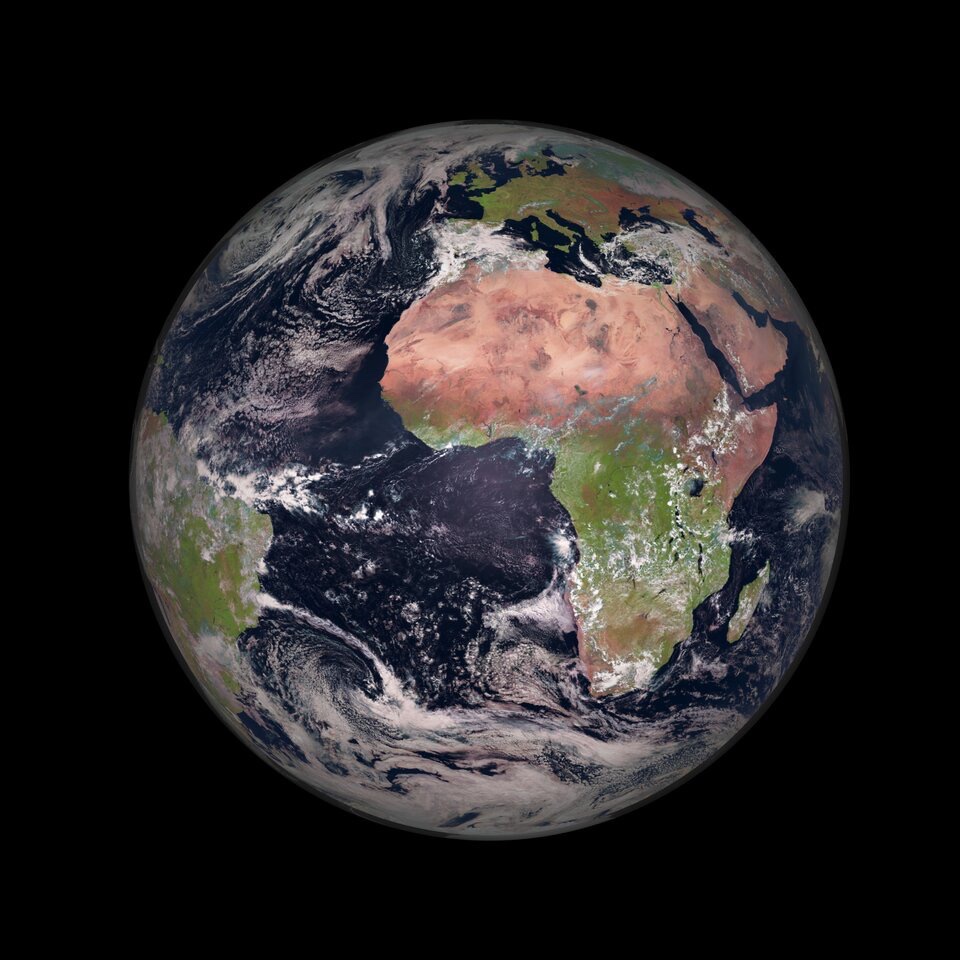
“Do you realize – we’re floating in space?”


Our ancestors were born on a spaceship that never needed refueling, repair, redesign or course correction.

Earthlings have all uniquely adapted to their respective natural, geographical habitats and migration routes — except for the warring and dominant human regimes and cultures — that decided for all Earthlings that they should geo-engineer artificial environments and extract the blood and bodies of the ancient ones — for one species’ sole benefit — until Earth no longer feels or looks like Earth – and has become unrecognizable, unsafe or uninhabitable to most other species.


photo credit : European Space Agency

There are PCBs in the Atacama Trench and microplastics in fetal tissue of mammals – of humans.

Despite all the wonderful river and beach clean-up and tree planting projects on Earth Day, for me, it’s always a contemplative and sobering day.


We all have a stake—equally. Because if we do not save the environment and save the Earth, then whatever we do in civil rights or in a war against poverty will be of no meaning, because then we will have the equality of extinction and the brotherhood of the grave.

James L. Farmer,
at the very first Earth Day,
April 22, 1970


Cronehood: the imperative, work, province and privilege of becoming truth and living truthfully in the depths

Ageing is no accident. It is necessary to the human condition, intended by the soul. We become more characteristic of who we are simply by lasting into later years; the older we become, the more our true natures emerge. Thus the final years have a very important purpose:

the fulfilment and confirmation of one’s character.

- James Hillman

“Life is a farce if a person does not serve truth.”

- Hilma af Klint

“A crone is a woman who has found her voice. She knows that silence is consent. This is a quality that makes older women feared. It is not the innocent voice of a child who says, “the emperor has no clothes,” but the fierce truthfulness of the crone that is the voice of reality. Both the innocent child and the crone are seeing through the illusions, denials, or “spin” to the truth. But the crone knows about the deception and its consequences, and it angers her. Her fierceness springs from the heart, gives her courage, makes her a force to be reckoned with."

— Jean Shinoda Bolen

portrait of a crone
by a queen crone,
Lajuana Lampkins

"Women's most feared power over men is the power to say no. To refuse to take care of men. To refuse to service them sexually. To refuse to buy their products. To refuse to worship their God. To refuse to love them. Every therapist knows that sex can be forced, but no power in the world can force love from any woman who wishes to withhold it."

- Barbara Walker

“The Crone has been missing from our culture for so long that many women, particularly young girls, know nothing of her tutelage. Young girls in our society are not initiated by older women into womanhood with its accompanying dignity and power. 

Without the Crone, the task of belonging to oneself, of being a whole person, is virtually impossible.”

- Marion Woodman

Continue reading “Cronehood: the imperative, work, province and privilege of becoming truth and living truthfully in the depths”

Stationed on the Crosses

The CruX: historically, continually, and invisibly stationed by, and on the crosses of, men

women, womxn, womqn, womyn and girls have been both the cross-bearers and the crucified – ever since the unnatural and unholy “conception” of the Roman Catholic Church and all its subsequent patriarchal, misogynist Christian derivatives.


Christa” – Edwina Sandys, 1975

the only, holy Trinity: maiden, mother, Ƈɾօղҽ

”As a symbol, the Crone had to be suppressed by patriarchal religions because her power ‘overruled the will even of Heavenly Father Zeus.’ She controlled the cycles of life and death. She was the Mother of God, the Nurturer of God, and, as a Crone, the Slayer of God. While Christianity retained the feminine as Virgin and Mother, it eliminated her role as Crone.”

-Marion Woodman, Dancing in the Flames, The Dark Goddess in the Transformation of Consciousness

Ƈɾօղҽ

Remember thy Self to keep holy

“You was blind to Him as your footprints in the ashes, but He saw you.

Beneath every disguise; in every gesture false or true; every silent resentment – He saw you in those dark corners. He heard you. Oh my brothers, He heard those thoughts.

Now, I am here today to talk to you about reality. I’m here to tell you about what you already know.


This, all, — this, is not real. It is merely the limitation of our senses which are meager devices. Your angers, and your griefs and your separations, are a fevered hallucination, one suffered by us all, we prisoners of light and matter…


Our faces pressed to the bars, lookin’ out, lookin up, askin’ the question, beggin’ the question — “Are YOU there?” Would that we had ears to hear – because every moment, every now — is an answer; every beat of every heart, every second of every minute, every minute of every hour, every hour of every day — is an answer.

And the ANSWER is: “Yes. Yes. Yes.”


Your sorrows pin you to this place; they divide you from what your heart knows…

And we bandage our soft selves in hardness and anger.


You are a stranger to yourself, and yet He knows you… And when your hard heart made you like unto the stone and broke you from His Body — which is the stars and the wind between the stars — He knew you. He knew you – yet and forever. How could the Father forget His children; how could the world forget itself?

Doesn’t matter that the children do not understand what they are. Doesn’t matter that the world thinks that it’s many different things — rather than One – HIM. Doesn’t matter.

My sad and joyous, and frightened and courageous brothers and sisters,

I want you to close your eyes and let your chest swell as His lungs; I want you to feel His Portion in us – in each other.

Every single one of you, I want you to listen for that answer:

If ever your sorrow becomes such a burden that you forget yourself – forget this world, I want you to remember this truth, this is as indelible as the sun in the sky and the ground beneath your feet:


This world is a veil, and the face you wear is not your own.


The shape of our true face is not YET known to us.


And so I press my eyes to the bars, and I look out, and I look up — and I ask the question, no! I BEG the question: Jesus Christ! Jesus Christ! – Your arms open and close, and the echoes of my life could never contain a single truth about You. You move the feather and ash, You touch the leaf with His flame, You linked Your soul to an Infinity of atomic creation, and of It – I am less than a drop in the ocean. How then can I know sorrow, how then, can I know despair? – Does the rain know sorrow, does the grass and the mountains, those beautiful mountains, know despair?

Such is not His Province, and so not be our purpose.

Be in Him, of Him, and then KNOW peace; that is His gift to us — our birthright.

In the End, we will find ourselves at the Beginning. We will at last KNOW ourselves; and our True Faces will weep in His Light – and those tears will feel like a warm rain.

Amen.”

Continue reading “Remember thy Self to keep holy”

limineen

the limineen
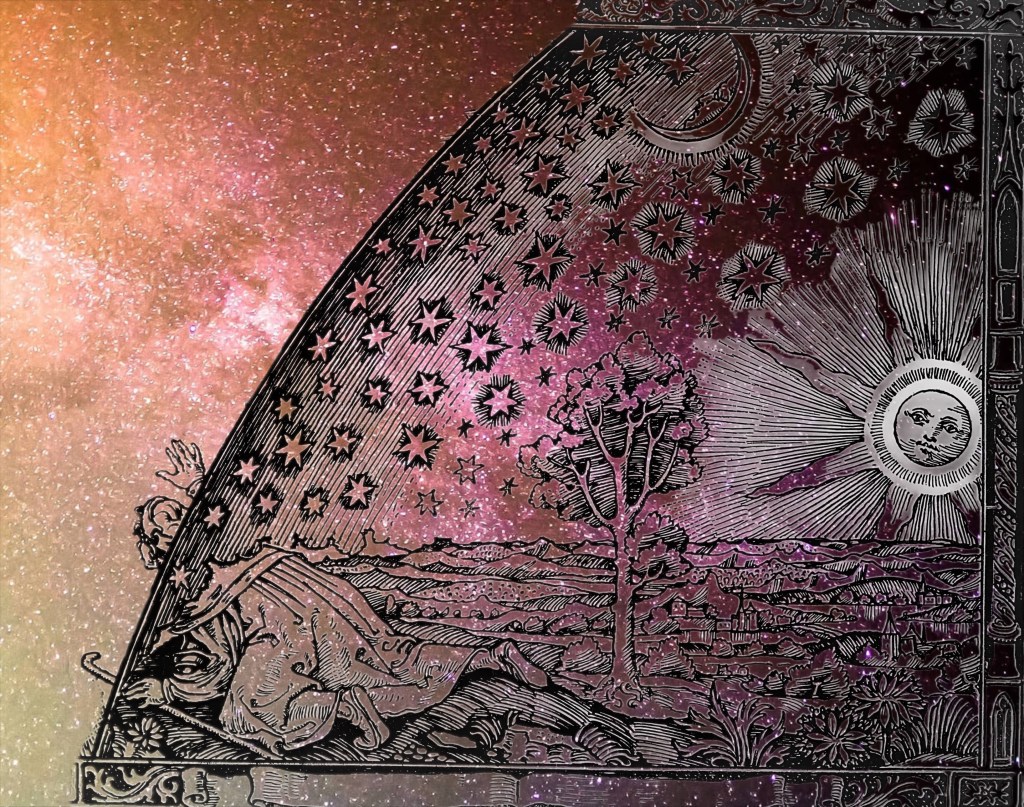
as imagined with
The Flammarion Engraving

Limineen : limin + een

noun: the time and space of the thresholds; attendance to or presence in, the in- betweens, the interregnum — of becoming and nonbecoming; of beingness and nothingness; of the material and ethereal; of sacredness and profanity; of love and hate; of calm and rage; of the authentic and the engineered; of inertia and energy.

limineen is both mood and State of this author, an Earthling, human, woman and entity, who finds her self present within and attendant to the thresholds of the corporeal, incorporeal and surreal.

from liminal / lim·i·nal
/ˈlimənəl/ adjective

  1. occupying a position at, or on both sides of, a boundary or threshold.
  2. relating to a transitional or initial stage of a process.

Continue reading “limineen”

Carl Jung: if you become radically vulnerable and true to yourself — through your life’s expression, you will attract your people


“Neither propaganda nor exhibitionist confessions are needed.

If the archetype, which is universal, i.e., identical with itself always and anywhere, is properly dealt with in one place only, it is influenced as a whole, i.e. simultaneously and everywhere.

Thus an old alchemist gave the following consolation to one of his disciples:

“No matter how isolated you are and how lonely you feel, if you do your work truly and conscientiously, unknown friends will come and seek you.”

It seems to me that nothing essential has ever been lost, because the matrix is ever present within us and from this it can and will be reproduced if needed.

But only those can recover it who have learned the art of averting their eyes from the blinding light of current opinion, and close their ears to the noise of ephemeral slogans.”

– Carl Gustav Jung: Letters, Volume II, p. 595

Continue reading “Carl Jung: if you become radically vulnerable and true to yourself — through your life’s expression, you will attract your people”

don’t let the mystery be

Flammarion Engraving

“… When the chips are down and for one reason or the other you begin to recognize that you are not going to be on this earth forever … your body is falling apart … you’ll be there and you’ll say: “I lived 60 years; I lived 70 years, or whatever it is; and I still don’t know anything; I don’t know where I came from, and more importantly, I don’t know where I am going; I don’t know anything mportant at all!!

I’ve been so reasonable, I’ve been so rational, I’ve been so sober; and now I stand before the door, and I am shaking like a leaf, and I am scared and I am miserable, because I haven’t learned what is important; I haven’t learned the truth — the essence of my own being; I have not been confronted with any reality … I tried to fit into the picture so nicely.”

You know what – the picture that you tried to fit into is going away – from you… be there [at the door] and there’s no picture, no society, no family, none of the things that you thought were so important – just you and a great stupendous mystery which will remind you:

“From that time you came into this world, I was available to you to be discovered; I was available to you to be known with your gnosis, but you haven’t done it at all; you didn’t pay any attention – you went after the reasonable will–o’–the–wisp and the unreasonable will–o’–the–wisp, but you didn’t take a look at this [great mystery]!”

Dr. Stephan Hoeller,
Bishop, Ecclesia Gnostica

Crone Consciousness


I could not live in any of the worlds offered to me…the world of my parents, the world of war, the world of politics. I had to create a world of my own, like a climate, a country, an atmosphere in which I could breathe, reign, and recreate myself… That, I believe, is the reason for every work of art. The artist is the only one who knows that the world is a subjective creation, that there is a choice to be made, a selection of elements. It is a materialization, an incarnation of his inner world.

Anais Nin

Here she stopped and, closing her eyes, took a deep breath of the flower-scented air of the broad expanse around her.

It was dearer to her than her kin, better than a lover, wiser than a book.

[For a moment] she rediscovered the purpose of her life.

She was here on earth to grasp the meaning of its wild enchantment and to call each thing by its right name …

Boris Pasternak, Doctor Zhivago

As soon as you are really alone you are with [the] God[head].

Thomas Merton