pinpoint the moment, the fulcrum, where verdant green life slips into hot summer crackle, Sun-steeped leaves aromatic, chamomile-like parched beneath our feet all those places where a hose will never reach, a scent in your nose reminiscent of a birthday hike on switchbacks to stand properly on, and in the shadow of, “The Grand”, a surprise, teal, glistening alpine lake. was that the time he dove from the rock like a young god, an Adonis? all those trips to Wyoming in August, in June,
begin to merge into one core memory, like a hunk of young granite forged and carried down in rock slide then, carried all the way down to the valley, in my pocket for him, to give to him, on his birth day. i ran down that mountain like a gazelle, way ahead of them it was the fastest and freest i have ever felt in all my life, truly and, i astounded them, all, — and mostly myself.
then, a long, quiet drive back to a newly dog-less city house how did this all happen in one June, one August, or — was it two? then, the first time i felt a chill in months, a different kind of crunch underfoot the wind rained down a carpet of leaves all about, in an instant
just as they appeared at birth, all golden again, but different, wiser,
small rodentia head under, in or up, mourning doves perform a vigorous last forage, hummingbirds, always reliable for last call, drink up/ rabbits boldly show out in numbers to spaghetti-slurp dandelion, plantain and clover stems/ barn and tree swallows own the lower troposphere
red-winged blackbirds cardinals, and robins in that exact order loudly call everyone home for the night
the air surrenders to insects, the sky — to bats, beautifully acrobatic /hey!/ cottonwood or black walnut trees will host owls on supremely, rare summer evenings
moths, beetles take the lamps frogs take the sidewalks, steps, stoop, walls, windows, and eventually, the lamps too/ toads pace and post sentry on barn thresholds
deer passage through — or bed down in the tall unmowed grasses, now properly – a prairie, a meadow, natural salt licks — and halved, quartered and whole apples, are my selfishly generous lures ’til autumn’s own bounty
coyotes herald the Moon or the first dark train, depending on the phase,
lightning bugs mimic eye-level stars, golden-gold like our Sun and in asynchronous constellations
raccoons strategize, then raid, but i know to expect them now possums about their business — quiet, slow, sweet — these, my dear ones, stay a while, please
cricketsong errant cicadas, what year is it, again? and incessant croaking, banjoing, ribbitting
sometimes, in the mirror she closes one eye, pulls, spreading the skin of her cheekbone, cheek, and jowl, down, away and taut to see what she’d look like in repose if she died a gentle death tonight
you think: if I merely bury this bitxch one day, she may raise up again //
and haunt not only your nightmares, but surface in your waking dreams and worse, in his
so instead, you two dismember her together on your walks at your coffee table in your marital bed // until she’s betrayed, and dead.
you decide to cremate her in your pristine oven, then collect her charred bones, grind them to ash with your mortar and pestle from Sur La Table dissolve a spoonful of her into your wine in secret, and drink it the rest, you feed to your lilacs //
you think: she’ll never again be whole or known //
yet, her linger slowly poisons you and your home
and, she waits
like Isis
to collect her relics that you foolishly thought you could consume, transmute and possess
her essence migrating into the strands of your wiry, brittle hair
and into the fragrant beautiful blooms and heart-shaped leaves just outside your door, that school children are so tempted to pluck.
then, one night, as you sleep,
she clips and carries them off — clumps and bouquet — in a pouch fashioned from your favorite silk dress — cruelly spun from the bodies of one thousand sacrificial worms — to break the curse
while his phallus pulses crimson, like a beacon, erect and dripping with life from his dreams of her //
as he sleeps,
she spits into his open, parched mouth before she soars out
leaves him with an eternal, wet, delicious taste of her
originally published june 17, 2016, revised june 11, 2023
* please visit the website/app Falling Fruit to add a fruiting tree that is located and accessible in the public way to the foraging database for others.
the author’s mulberry-stained fingers
A clear glimpse
A clear thought
on this clear June night
Of age,
and Alzheimer’s
the old-timer’s disease
A clear memory recorded and archived tonight
An acute awareness of myself
tonight, in time and place
a new track to play on loop for a listener in my future life
a husband, friend, or son
a caregiver, a kind one
a visitor, volunteer, or nurse,
a grandson, or maybe — no one
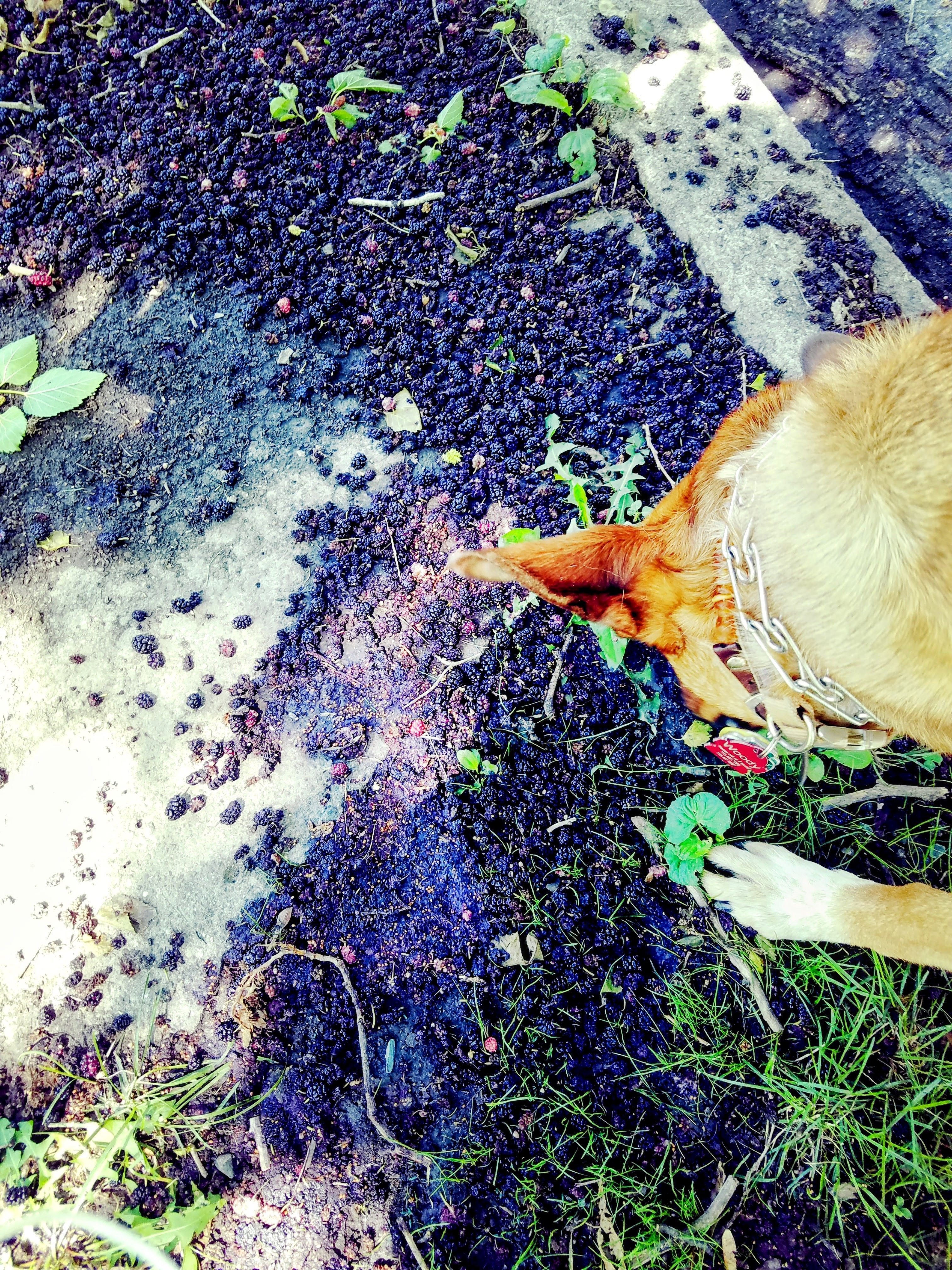
A reddish dog, eating mulberries
from the sidewalk in shadows
Mottled concrete in the dim light of a city street lamp
obscured by the canopy of that beautiful, June, fruit tree
Woody Guthrie, the mulberry forager
A woman, middle aged, seems so young, even a tad pretty, in her mind’s eye now
Stretching her still strong body upward for plump, dark berries
Reaching for branches trimmed too high by the urban foresters
or arborists or surgeons, I forget what they’re called
On her tippy toes
grabbing, pulling, picking
squeezing the dog’s leash between her thighs
don’t let him get loose in the dark, don’t let him get skunked in the dark
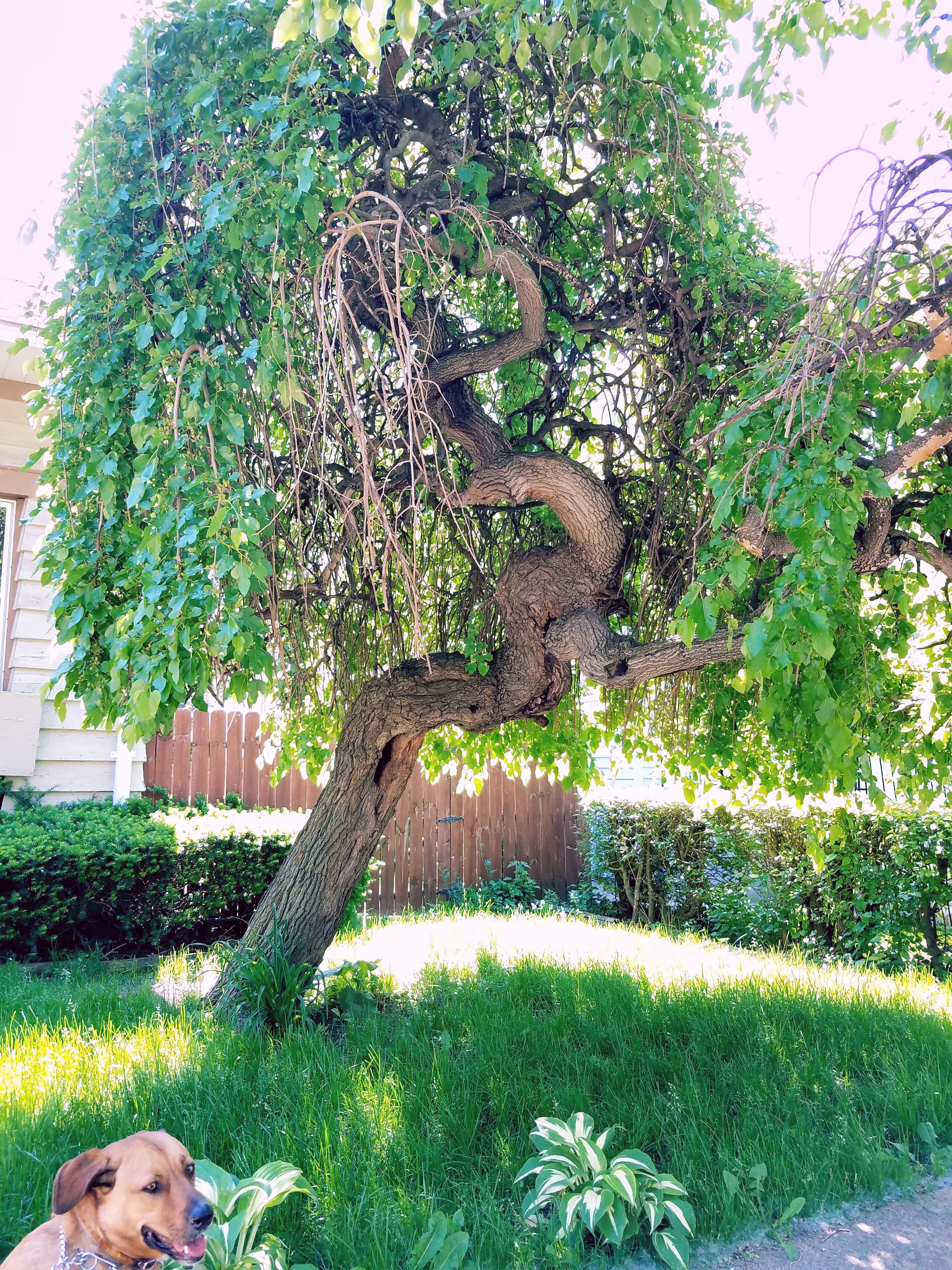
a contorted mulberry tree at night, located in a private front yard, but sidewalk spillage is fair game
the same contorted mulberry in Sun’s light: wowowow
Some of the best ones are lost in the awkward tussle
before she can palm them, save them, taste them
She triggers a reverberative rain from boughs on high
That precise, delicate sweetness of the bounty in her mouth
The dog’s belly full of the ripe windfall
sustained by both gravity and this woman
His name was Woody, or Digby, I think
He used to climb into our sleep
Smashed and whole
The street, sidewalk and cars stained
by the impressive purple mess
the dark grass hiding perfect treasures for doves tomorrow morn
She and that dog,
They were urban foragers and gleaners in June.
All month long, her fingertips, feet and lips
tinted with their fuchsia dye, it didn’t even once occur to her to check his paws
A clear, recollection of acute melancholy:
this day — that day was also her son’s birthday //
The first birthday he ever spent away from home, away from her — in Nebraska, or was it Alaska?
That glorious tree, that good dog, that golden boy
an impressive purple mess-feast
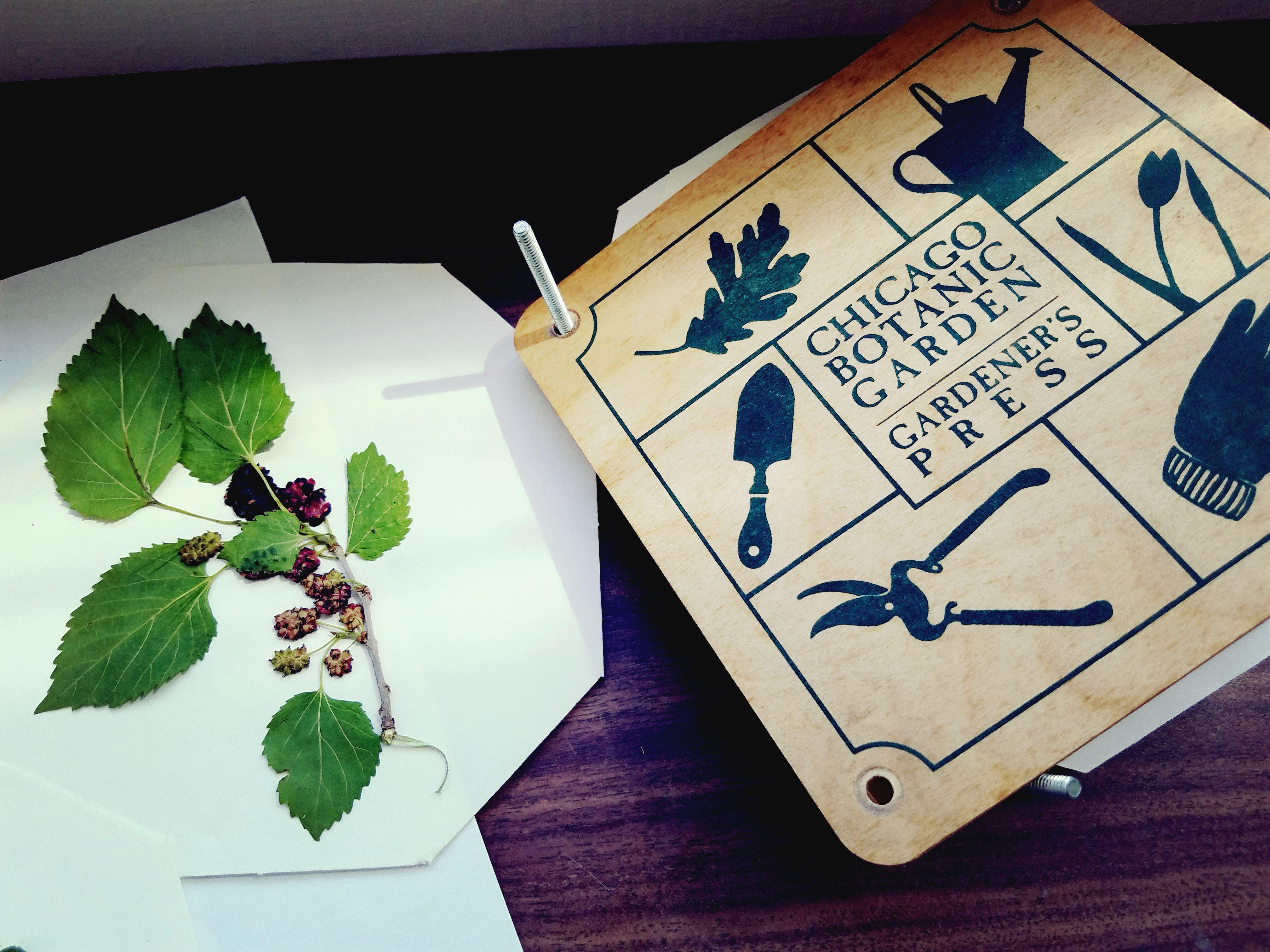
i pressed a twig and berries from the Le Claire street mulberry, before I moved to the otherside of the Lake; i used my Chicago Botanic Garden gift shop flower press.
i pressed a twig and berries from the Le Claire street mulberry, before I moved to the otherside of the Lake; i used my Chicago Botanic Garden gift shop flower press.
how can i “calm down” when all i feel is love and rage, when all i experience is beauty and pain/ no in-between / pass the cab and the kettle corn / and if you didn’t want me to opine on fresh-cut flowers and this film — then why, why, why – did you insist that my eyes see them – yes, i know there are flower farms —— but have you heard that pollinators aren’t allowed indoors around vases? it’s none of anyone’s business how many time i’ve seen “Almost Famous!”
yes, i am a mother, and i drink too much wine, sometimes — but he’s in Albuquerque not in a crib in the next room — i wish time travel were true // and other times, wine is not enough to squelch the pangs – of 18 years gone in a flash but thousands of hours wasted on PTA — and fucking homework ! /// i took my kid road-tripping and camping, sent him to the SCA and The Tetons to keep him out of these systems — how many huckleberry milkshakes at the Pioneer Grill does it take to finally see mountains and bears and rivers and trees as real living persons? well, i can actually tell you!
we had our deep talks, but not enough, never — how can time spent philosophizing be measured? in life choices and paths — that’s how. and i’m proud.
can you make a pact with me and promise i’ll never have to eat these words – especially the rants — and when, not if, i say something really wrong — you’ll push bowls of fresh figs and olives in my face to shut me up as a signal? salsa and chips will work too
can i tell you i’m broken without you trying to fix me? can you tell i’m broken — or do i wear it well? do these big feelings make my brain look small?
never stop showing me the radiance of you just because i’m dark — someone has to be the shadow, the mourning veil, the contrarian — and i know i volunteered — a long time ago — but “at some point” i really would appreciate a different assignment?


 the limineen | earthling, poet & crone