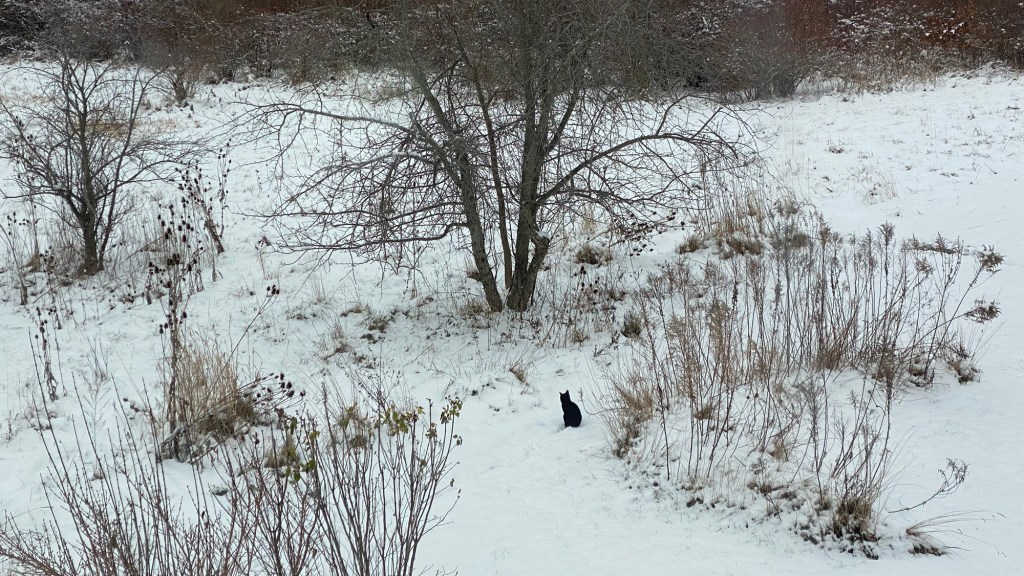
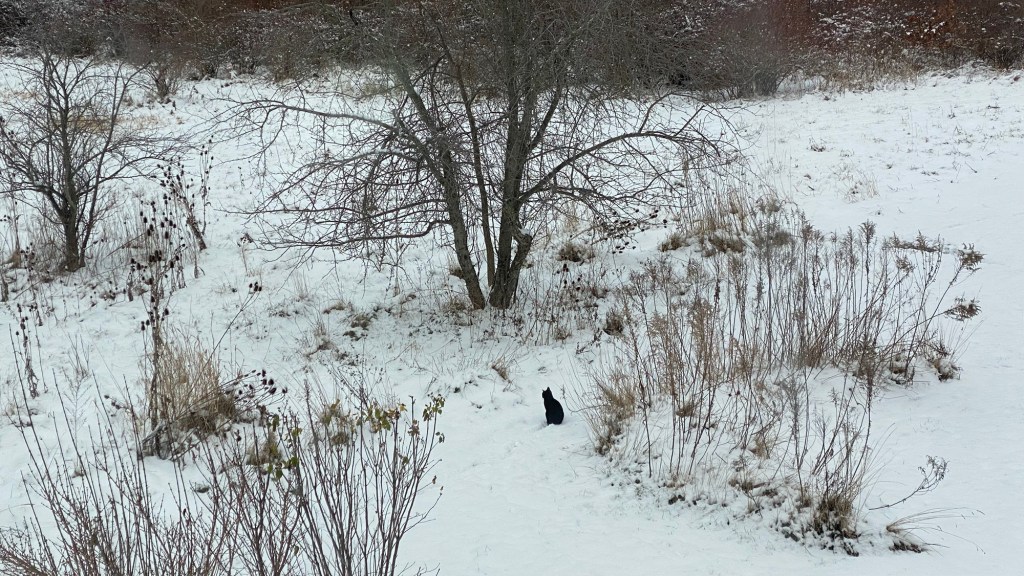
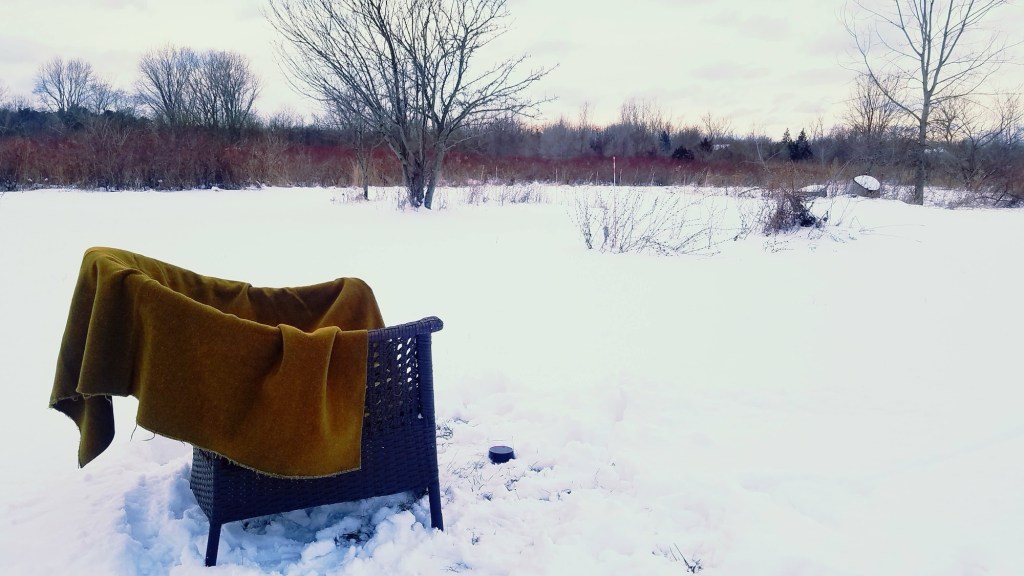
when the Sun reaches the precise height above horizon, then arrive the tawny-bodied apple pickers and gleaners/ stilts for legs, i count twenty limbs in tree camouflage/ bypassing the bushel and the sack the bounty of fruit down into their bellies //
ears like SETI, searching for sounds of hoof-less life — canine or primate in the universe and also, for movement of my unseen, yet intense presence —my breath and pulse slowed, just above, just beyond them —
but i am not in a tree stand/ i brandish no shotgun, no ray gun ///
how rare, these ones are among us,
— among we Earthlings :
silent, gentle and elegant ///
they linger in the morning gold as it stretches West to the lake and evaporates too quick into its blues/
i linger in the dark cool of the open bedroom window, facing North
my senses also honed — and sated//
on this eve of August’s ides,
autumn has not trespassed on the summer, but was intentionally summoned ///
apple-picker in the morning on the eve of August’s ides 2024
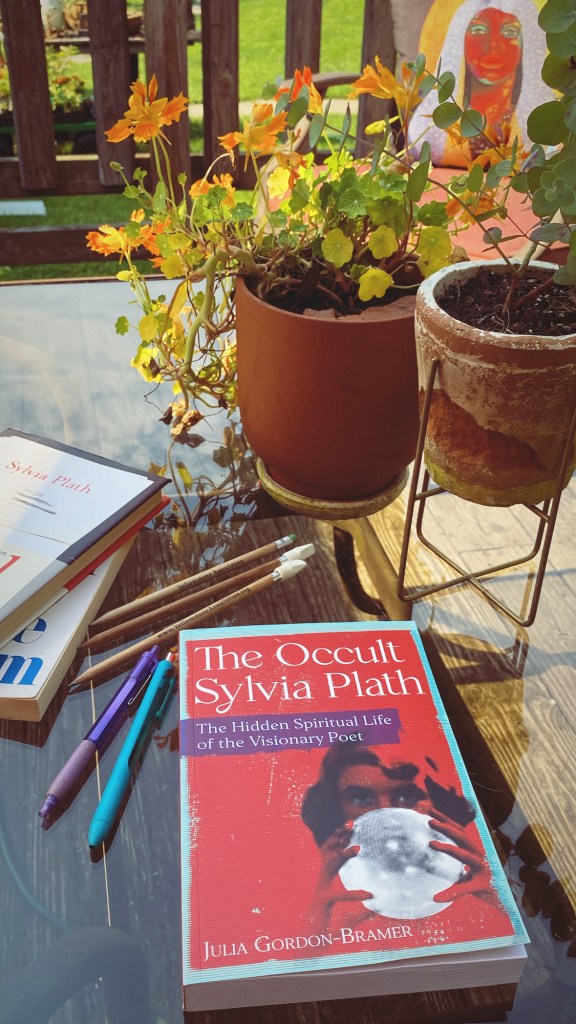
i feel fortunate this book was my introduction to Plath and her poet husband, Ted Hughes— and other significant influences in her life and poetry /
hat tip to my long-time favorite podcast: Aeon Byte Gnostic Radio — created and hosted by Miguel Conner at The Virtual Alexandria for interviewing Gordon-Bramer, because, for the first time ever, i was actually interested in Plath — and furthermore, i unexpectedly experienced a psychic “something” with Plath while listening to the audiobook; this “something” — i want to digest, explore – and possibly explain, in detail, in a future essay //
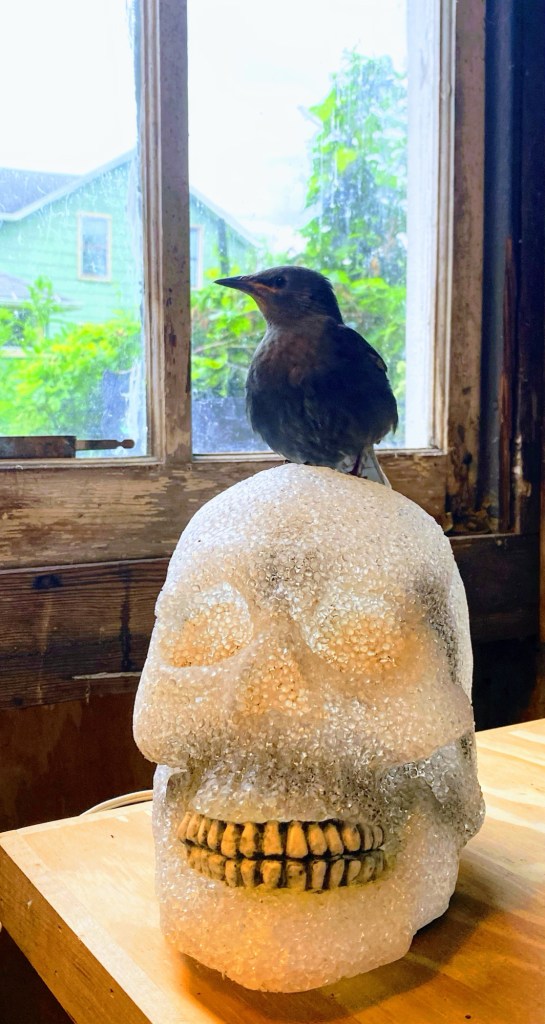
while i imbibed this book, i was simultaneously raising an injured and orphaned starling nestling — on an intensive feeding schedule — and during this time, i learned from the book, that Sylvia and Ted also attempted to rescue an injured and sick baby bird — but after a week, and upon determining rehabilitation was futile, they jointly and sadly euthanized the bird in their gas oven (i know. wow.) ///
mid-late april, optimistic early may, expectant mid may, consternation
meticulously, i sanitize the vessels, bases and perches soaking and fastidiously brushing the red and yellow flower parts to clean them of all gunk and lodged debris i employ two, simple, pinched-waist, glass hummingbird feeders // there are more beautiful, ornamental, more expensive or cheaper feeders available, but this design functions best/ i am a seven year veteran of hummingbird joy.
age-old recipe for hummingbird feeder nectar:
1 part pure cane sugar.
PURE. CANE. SUGAR.
to
4 parts water.
the end.
not beet sugar, not organic sugar, nor turbinado, nor raw, never brown sugar this so very important – other sugars are too susceptible to mold, to bacteria, or contain too much iron in the form of molasses.
pure, white, refined and granulated cane sugar, chemically and nutritionally, most closely approximates natural flower nectar
never ever, use store-bought nectar mix* or pre-mix*;
*and when in a store that sells that toxic shit, bury the packets or hide the bottles behind other merchandise on the shelf — just as when i spot Clinton, Kissinger, Amy Schumer, Dubya, or Sheryl Sandberg non-fiction fictions on the shelf at bookstores or big box stores — i flip that tripe backwards and upside down
the almost-surreal beauty of the evening of the 29th day of April, 2024 CE Cenozoic Era Quarternary Period Anthropocene Epoch Michigan, North America
“Why is the World so beautiful?” asks, Dr. Robin Wall Kimmerer.
It didn’t have to be — the Earth could’ve been Big-Banged out into a uniform, utilitarian and dull rocky planet — evolving without bluebirds, banana trees and bioluminescent jellyfish — or April’s apple blossoms, golden-pink sky Sunsets, and frog choruses,