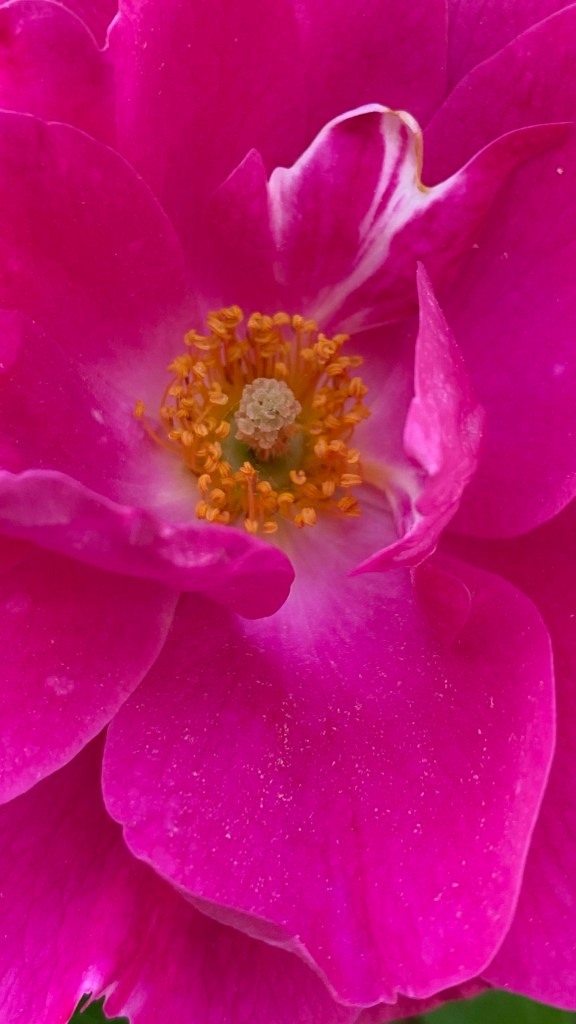
weeds, july

while washing dinner dishes
a hummingbird surprised me
feeding on a milk thistle
them overgrown “weeds” just outside my window

you see, it’s not just about my garden that i tend to
but the things i leave alone,
that i let go,

i let grow wild, too

i didn’t get a photo, my hands were too wet with soap
yet i really wanted you to know about this, really, to know this, about us, both

you see, we, errant human weeds, you need us too
we’ll prick your finger
we’ll quench your thirst
we’ll tell you truths

up close & personal
Continue reading “weeds, july”

Earthling in Planetary Hospice: late July 2023

I have been in existential hospice for a while now — not because I am personally terminally ill, but because I am experiencing and witnessing our planet die – the planet that we and all our fellow Earthlings from the salmon to the sycamores, from the gulls to the goldenrods, from the frogs to the funguses require for habitat — biologically, habitat is synonymous with life, with sustainable, continuing existence.


a new section of the Limineen
where I share climate and environmental metrics and information about climate chaos and collapse and write about my own experience of existential hospice and Planetary Hospice.

The Western World and the white-European capitalist and middle classes — that have driven industrialization; fossil fuel extraction; natural, animal and human resources exploitation, commodification and exhaustion; consumer greed and waste; and atmospheric, environmental and ecological devastation and destruction — will not ride this one out like some cyclical economic corrective shockwave or isolated ‘natural’ disaster — this is not like a stock market crash, an engineered mortgage crisis or a flash flood or rogue tornado that temporarily inconveniences the well-insured:

no, they, their children and grandchildren will suffer and die as well.

The greatest shortcoming of the human race is our inability to understand the exponential function.

Dr. Albert Bartlett, 1923-2013
Ph.D. Nuclear Physics, Harvard University/Professor Emeritus University of Colorado

I can understand how ignorance, whether willful or innocent, is preferable. But now is the time for the truthful acknowledgement and acceptance of the catalyzation of unstoppable and irreversible feedback loops coupled with an accelerating rate of change projected to their reasonable scientific conclusion.

It’s also time for individual personal ecological recognition and reconciliation.We are pure consumers, we are not producers. We are human animals reliant on habitat and other species for our lives — there is no other Earthling species naturally reliant on human beings. It is essential that each one of us understands the gravity of this — and undertakes palliative, hospice and grief work for ourselves, for other beings, for other Earthlings, right now.

Being present as witness and participant, perpetrator and victim, and caregiver and care-receiver during the death of the World as we have always known it, is an undeniably crushing experience and responsibility — but simultaneously, it is also an incredible, incredulous, and humbling honor.

What a time to be alive, truly.

I don’t think anyone of us will garner a reservation on some exclusive, off-planet ‘Elysium’ – and I, myself wouldn’t want one.

Immense grief is the close companion to the immense joy and wonder that I still feel and experience.

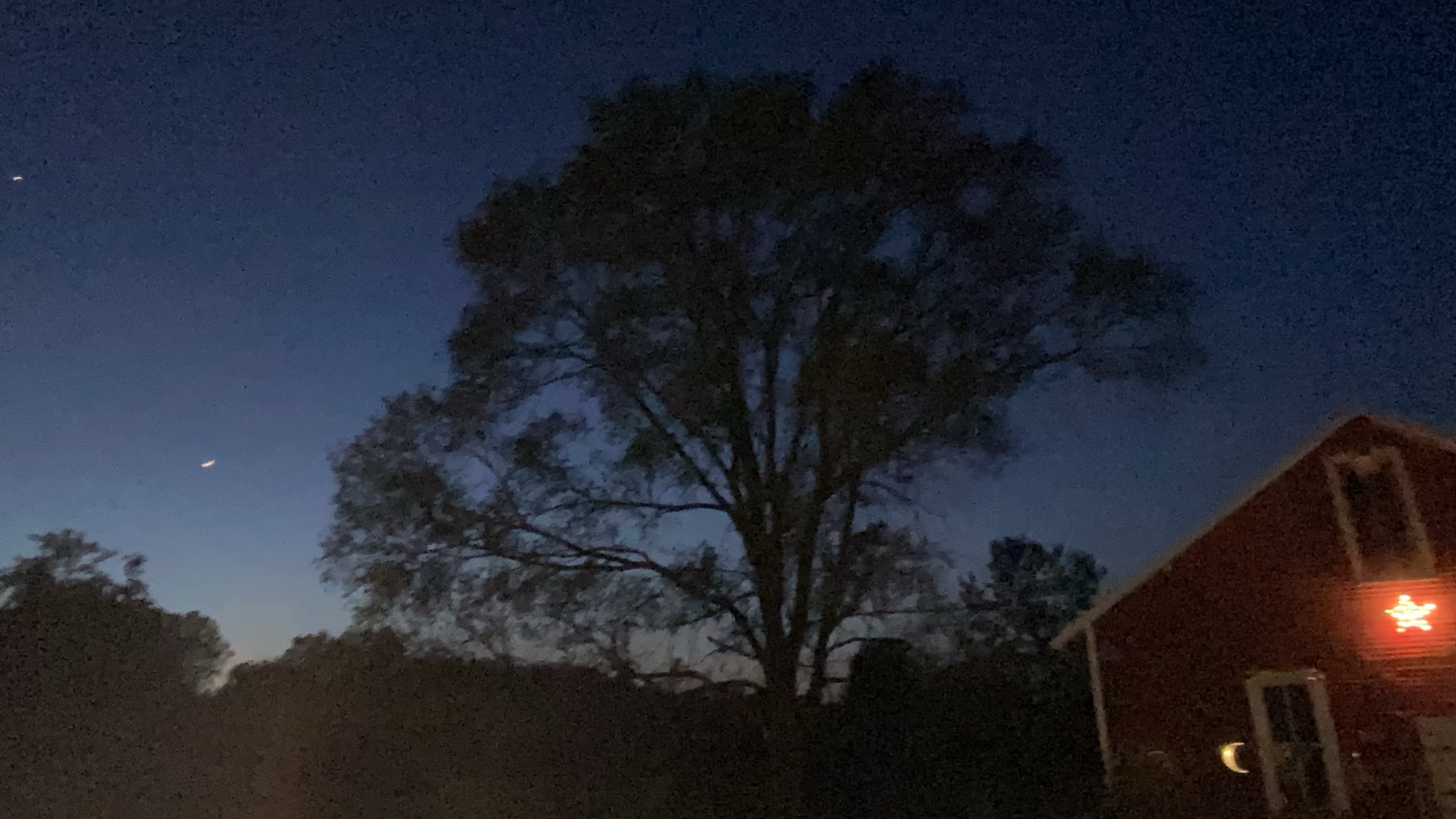
night falls, late july

nightfall
proceeds like this

small rodentia head under, in or up,
mourning doves perform a vigorous last forage,
hummingbirds, always reliable for last call, drink up/
rabbits boldly show out in numbers to spaghetti-slurp dandelion, plantain and clover stems/
barn and tree swallows own the lower troposphere

red-winged blackbirds
cardinals, and robins
in that exact order
loudly call everyone home for the night

the air surrenders to insects,
the sky — to bats, beautifully acrobatic /hey!/
cottonwoods or black walnuts will host owls on supremely, rare summer evenings

moths, beetles take the lamps
frogs take the sidewalks, steps, stoop,
walls, windows,
and eventually, the lamps too/
toads pace and post sentry on barn thresholds

deer passage through — or bed down
in the tall unmowed grasses, now properly – a prairie, a meadow,
natural salt licks — and halved, quartered and whole apples,
are my selfishly generous lures ’til autumn’s own bounty

coyotes herald the Moon
or the first dark train,
depending on the phase,

lightning bugs mimic eye-level stars,
golden-gold like our Sun and in asynchronous constellations

raccoons strategize, then raid, but i know to expect them now
possums about their business — quiet, slow, sweet — these, my dear ones, stay a while, please

cricketsong
errant cicadas, what year is it, again?
and incessant croaking, banjoing, ribbitting

fog may appear,
then settle — or lift,

or maybe the night is sultry, still or clear

Continue reading “night falls, late july”

from the inner city to the outer rural:

first in a series

new geographies

All movement is thirst.

Hafiz

she moved out of the city of them, into the country of Her Self

in January 2017, i impulsively yet instinctively, instinctually, bid on a house in the country — after viewing one listing on the internet employing the most banal search terms — and never having physically toured the interior of the house; after losing the first bid, and rebidding within minutes to spare, in the second round — as my unfamiliar real estate agent was at the gate at O’Hare about to board a plane for a Caribbean vacation, i won with a numerological bid (against the agent’s advice) and closed escrow on March 30th; then in late July, i abruptly and stunningly — listed my home of 22 years in the city — for-sale-by-owner— without even a for-sale sign and telling only a handful of people — selling it twice, the second time, successfully — also using numerology, in August; then closed sale and left for the country house on September 29th —

nine months time – a human gestation.

Continue reading “from the inner city to the outer rural:”

“[S]he floats like a butterfly …”


Muhammad Ali diptych
marker, paint, glue and chunky gold glitter
on 12”x12” square
gold metallic cardstock

These two gorgeous, requested works by the most gorgeous and extraordinary artist and person Mz. Lajuana Lampkins of Chicago.

You might find her making her art in the late night scene of her favorite spots in the Wicker Park/Bucktown neighborhoods of Chicago — or reach out to her on Instagram at Lajuana.Lampkins1 and peruse her art, her process and her community.

Lajuana Lampkins has had her art exhibited to great praise; she is a prolific and widely collected street artist; and she has edited and published a book of her late son’s essays, poetry and letters: The Collected Works of Prince Akbar AKA Jus Rhymz.

She is also a sister, aunt, friend, poet, community member and activist, writer, rapper, historian, archivist, fashionista, paralegal, social commentarian and modern philosopher — but most proudly, a mother, grandmother and great grandmother

— and to me, she epitomizes the Crone.


Champions aren’t made in the gyms. Champions are made from something they have deep inside them: a desire, a dream, a vision. They have to have last-minute stamina, they have to be a little faster, they have to have the skill and the will. But the will must be stronger than the skill.

Muhammad Ali

Mz. Lampkins works may be exhibited again in autumn 2023 in a community art show that she is hoping to create and develop —-and she aspires to publish her next non-fiction book in the nearer future.

She is also the subject of the forthcoming documentary “My Mother is An Artist” which follows Mz. Lampkins’s journey from 2019, eight years post-release from a 30 year incarceration as a wrongfully prosecuted and convicted young woman and mother —to 2023, as a working, locally-renown and yet-still-struggling artist living in these American systems of modern oppression and exploitation.

Continue reading ““[S]he floats like a butterfly …””

song[s] of my self: epigenetic lamentations

During the summer of 2017 – a time of significant change in my life – including the rupture of my marriage, an upcoming “milestone” birthday, and a relocation to a quiet rural place with dark skies and an abundance of fauna and flora — I literally heard myself: I had unconsciously begun a meditative practice of singing or humming verses and melodies of sorrow, wonder, gratitude — or simply, of the mundane. They were autonomic and presumably original, lamentations.

then, serendipitously, I retroactively encountered a May 2017 piece published in Yes! magazine about the revival and history of “lament singing” in Finland.

To find that I was unconsciously, but actually, participating in a Finnish tradition that I had never experienced or even heard of — but that was somehow still within in me — in some cellular, trans-generational or ancestral place — felt like a bridge to my lineage — to all my unknown women-kin.

The lyrics and tunes occurred spontaneously over several months, and I often automatically repeated the same one over and over while working, cleaning, cooking, gardening, walking or driving. I sung or hummed them mostly while alone, but sometimes they would emerge aloud in public places — and I didn’t even realize that I was in song or know how long I had been doing it.

People who laugh, cry, sing and talk to themselves aloud in the street are not “crazy — we are comforting, raging, celebrating, mocking and mourning ourselves, our lives, our experiences and the world.

Continue reading “song[s] of my self: epigenetic lamentations”

life support: the breath of words

We write to heighten our own awareness of life. We write to lure and enchant and console others. We write to serenade our lovers.

We write to taste life twice, in the moment and in retrospection.

We write, like Proust, to render all of it eternal, and to persuade ourselves that it is eternal. We write to be able to transcend our life, to reach beyond it.

We write to teach ourselves to speak with others, to record the journey into the labyrinth.

We write to expand our world when we feel strangled, or constricted, or lonelyIf you do not breathe through writing, if you do not cry out in writing, or sing in writing, then don’t write because our culture has no use for it.

When I don’t write, I feel my world shrinking. I feel I am in prison. I feel I lose my fire and my color. It should be a necessity, as the sea needs to heave, and I call it breathing.“

~ Anaïs Nin

Cronehood: the imperative, work, province and privilege of becoming truth and living truthfully in the depths

Ageing is no accident. It is necessary to the human condition, intended by the soul. We become more characteristic of who we are simply by lasting into later years; the older we become, the more our true natures emerge. Thus the final years have a very important purpose:

the fulfilment and confirmation of one’s character.

- James Hillman

“Life is a farce if a person does not serve truth.”

- Hilma af Klint

“A crone is a woman who has found her voice. She knows that silence is consent. This is a quality that makes older women feared. It is not the innocent voice of a child who says, “the emperor has no clothes,” but the fierce truthfulness of the crone that is the voice of reality. Both the innocent child and the crone are seeing through the illusions, denials, or “spin” to the truth. But the crone knows about the deception and its consequences, and it angers her. Her fierceness springs from the heart, gives her courage, makes her a force to be reckoned with."

— Jean Shinoda Bolen

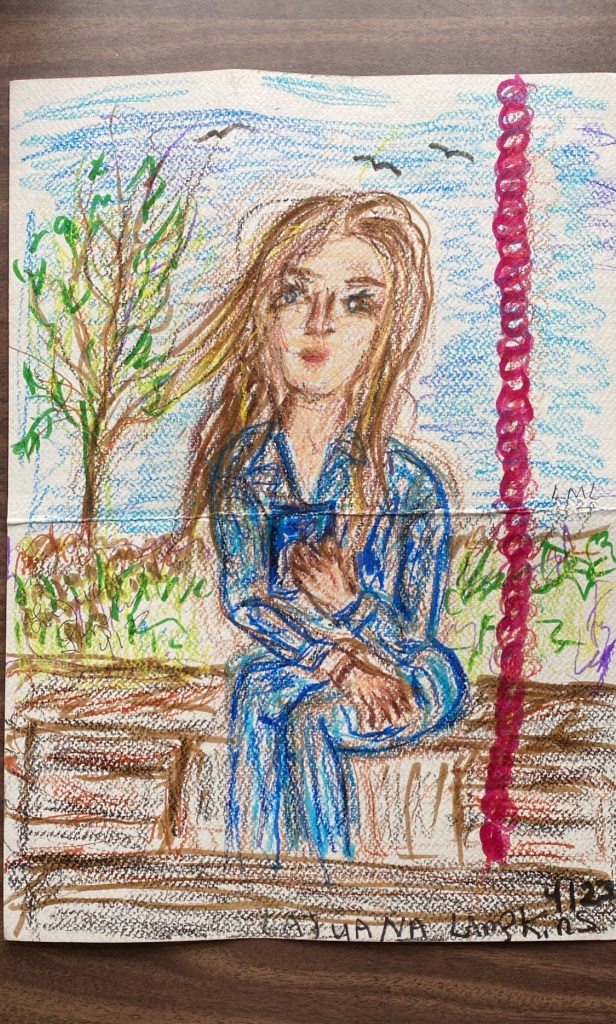
portrait of a crone
by a queen crone,
Lajuana Lampkins

"Women's most feared power over men is the power to say no. To refuse to take care of men. To refuse to service them sexually. To refuse to buy their products. To refuse to worship their God. To refuse to love them. Every therapist knows that sex can be forced, but no power in the world can force love from any woman who wishes to withhold it."

- Barbara Walker

“The Crone has been missing from our culture for so long that many women, particularly young girls, know nothing of her tutelage. Young girls in our society are not initiated by older women into womanhood with its accompanying dignity and power. 

Without the Crone, the task of belonging to oneself, of being a whole person, is virtually impossible.”

- Marion Woodman

Continue reading “Cronehood: the imperative, work, province and privilege of becoming truth and living truthfully in the depths”